Sailing across the Atlantic Ocean on someone else’s boat is not a straightforward endeavour. Finding a boat is one thing. Finding the right boat, crew, and captain match is what makes all the difference.
I’ve sailed across the Atlantic five times now. Once I left a boat before setting sail. So many lessons learned along the way. Here are some of them.
Almost every day at Ocean Nomads we get a message from someone who’d love to sail across the Atlantic as crew. Over the years we’ve created a book, the Zero to Ocean Nomad course, a film, an active network to help make this dream real. Many of our members have done it. Many more are looking to.
And we organise our own ocean voyages, which you can join.
Here are some waypoints to make your Atlantic crossing happy, safe, and meaningful.
10 tips for sailing across the Atlantic Ocean as crew

1. Have your WHY clear
Why do you actually want to do this? Are you crossing to gain sailing experience? To learn as much as you can about seamanship? To travel from A to B and reach a certain destination by sail? To meet people living on sailboats? To just be away from all of it for a few weeks? Or to chillax on a downwind sail and anchor in pretty bays?
Search accordingly. There is a huge variety of sailing vessels, styles, sailing routes, and captains. Only some of them will match what you’re actually looking for. Knowing your why makes it easier to find the right ride.
2. Be confident, or start small
Be confident you’re ready to set sail for an ocean passage. You owe it to yourself, your captain, and your fellow crew. If you’re not sure about the full Atlantic, start with a trip near shore or a shorter offshore passage, like sailing Madeira to the Canary Islands (2-3 nights offshore), or the Canary Islands to Cape Verde (1 week offshore). You can find passages like these on our trips page. Try one to figure out if ocean sailing is for you.

3. Know the bearings: Atlantic crossing routes, distances, and timing
To be ready for the unexpected, careful preparation is essential. Especially for a transatlantic crossing.
Learn about the Atlantic Ocean passage ins and outs. The seasons, distances, destinations, weather, costs, and crew tasks. Know when the trade winds kick in and where the prevailing winds are. Understand the Atlantic circuit and the different north Atlantic routes. How many nautical miles east to west and west to east. The safety equipment essential on board and as a crew member. And so much more. You’ll find all of this in the resource library of the ocean nomads member hub.
- East to West (the trade wind route): Canary Islands or Cabo Verde to the Caribbean. Roughly 2,700 nautical miles. November to January, after hurricane season ends.
- West to East (the northern route): Caribbean to the Azores to Europe. Roughly 3,500 nautical miles total. May to June, taking advantage of the prevailing westerlies.

4. Be flexible with time, place, and money
Sailboats deal with seasons, routes, weather, breakage, and all sorts of variables you can’t control. Thinking about scenarios in advance makes it easier to peacefully change course and comply with captains’ calls when things shift. And they will.
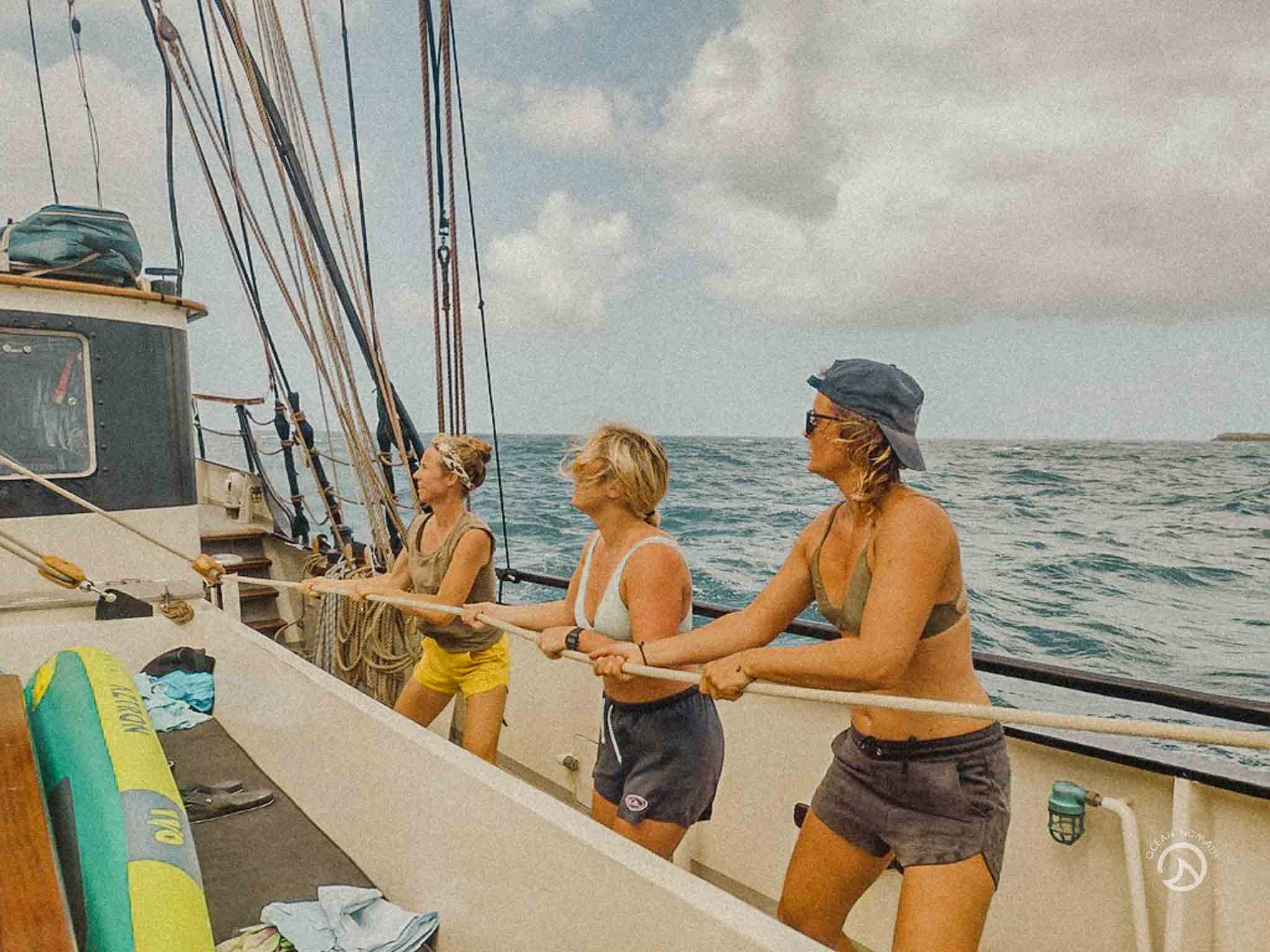
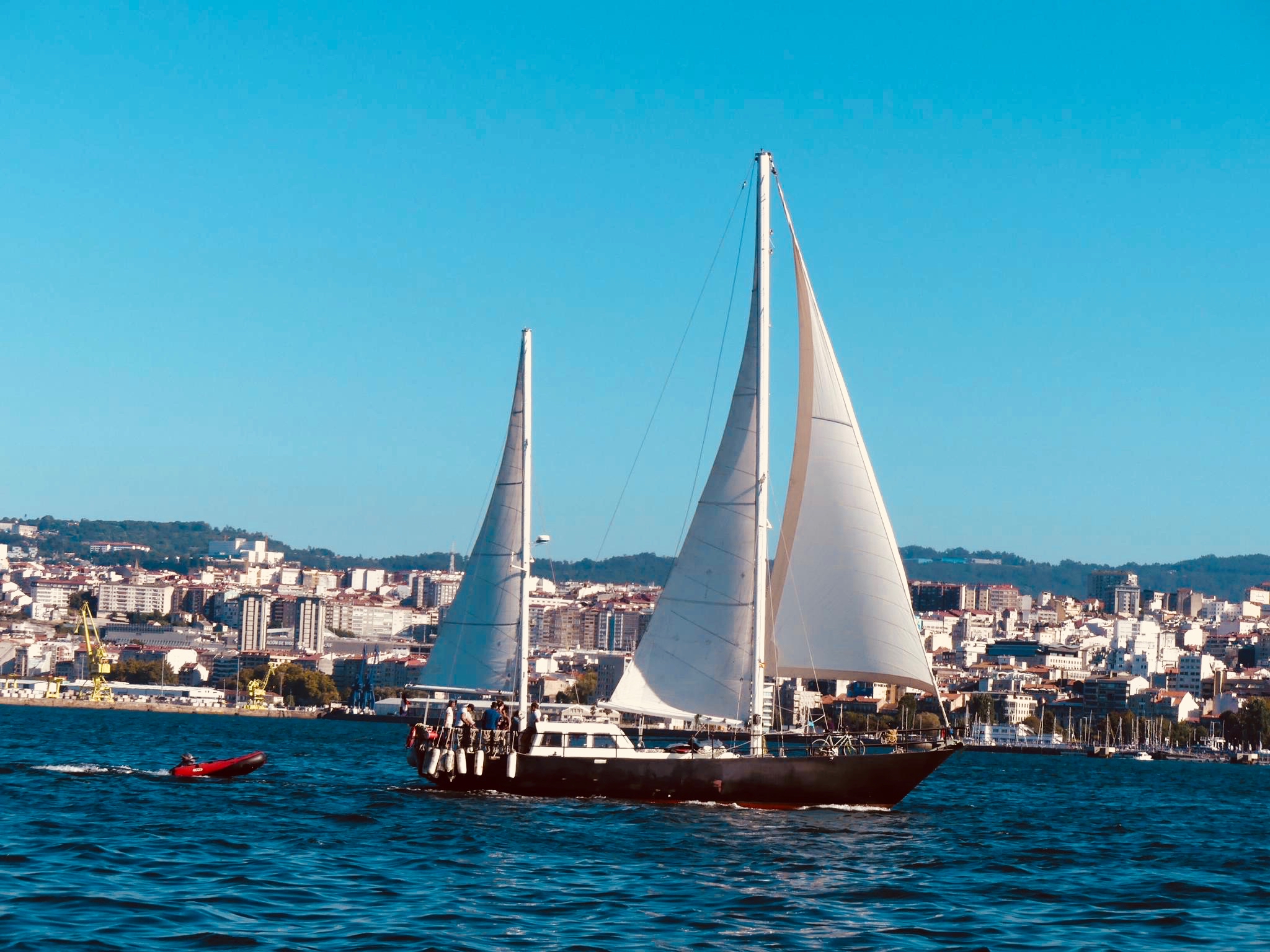
That said, when we organise an Atlantic crossing on a tall ship like Twister, the professionalism and nature of the vessel allows for a more set schedule. And a beautiful space to unite a selected crew of impact-driven ocean adventurers.
5. Choose your boat, captain, and crew carefully
I’ve met too many people who thought they’d just hop on a boat and sail across the Atlantic. Unsurprisingly, many of them didn’t have a pleasant experience. Which is a pity. It should be a voyage of a lifetime to never forget.
On the Atlantic Ocean, you live, work, eat, and leisure together for weeks. Non-stop. It’s like camping in the wild with a bunch of strangers. Only you can’t walk away.
So research the boat, the captain, and the crew carefully. The people you share the experience with will either make or break it. Realise that anyone can buy a boat without experience or a license. Exchange messages, ask questions, talk to each other on the phone (preferably with video). Meet up if you can, fix things together, go for a test sail. Don’t let your eagerness to make a trip override your instinct and judgement.
And network. Sailing the Atlantic is a big deal and a big dream for many skippers. They want to undertake this adventure with people they feel good with, people they know, or who are referred by others they trust.
Inside the Ocean Nomads network, this kind of matching happens organically. Sometimes a member is preparing a boat and looking for crew. Sometimes one of us knows a boat or a captain and connects the dots. Sometimes a member is considering crossing and just chatting about it sparks the next opportunity. Recently Thomas found his Atlantic crossing crew through the network. Koen found his support vessel for kiting across the Atlantic through the network too.
Atlantic crew positions don’t open up every week. But when they do, they tend to be quality matches because everyone involved already shares values and references. Have a foot in the door early so when something matches what you’re looking for, you’re already there.
We also have meet-ups in the main Atlantic crossing hubs. Las Palmas in the Canary Islands. Mindelo in Cabo Verde. Both are key starting ports for the east-to-west crossing. Half the boats and connections you’ll need don’t show up online. They show up through networking and exploring harbours and marinas.

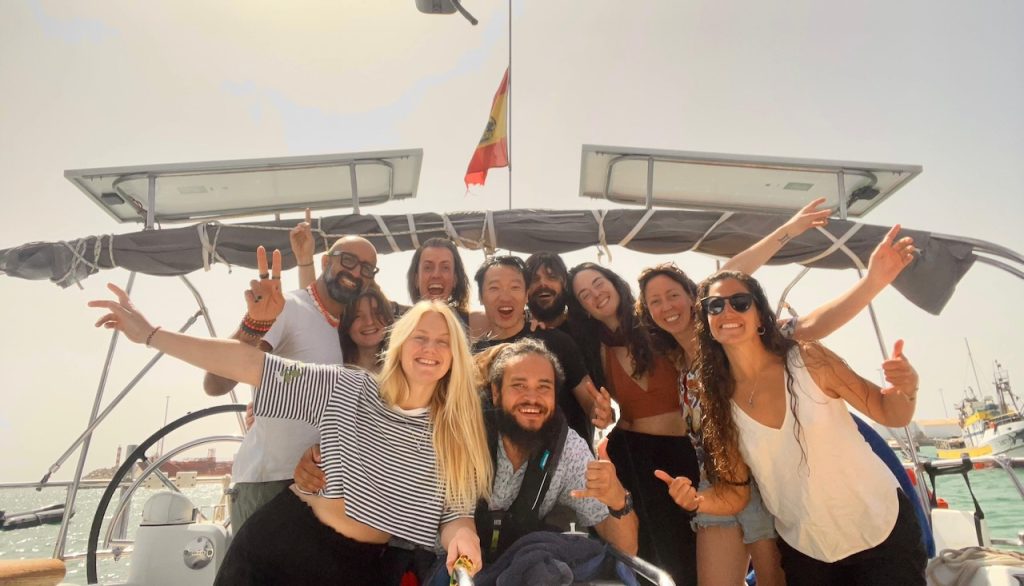
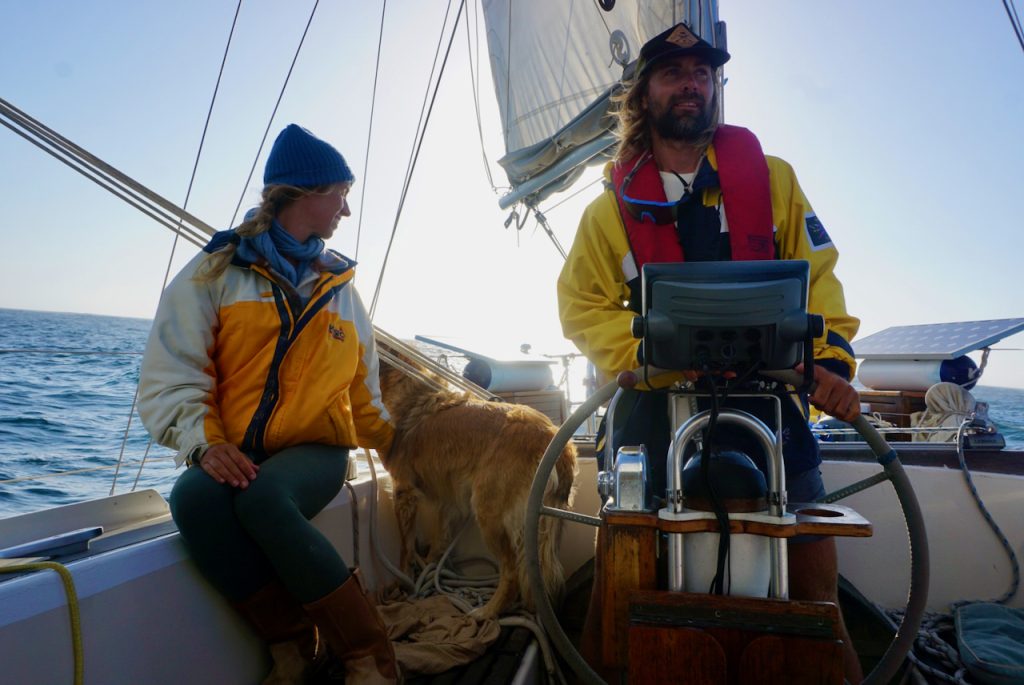
Ocean Nomads crew sailing from the Canary Islands to Cape verde
6. Always talk to the captain
When you’re assessing options and figuring out if a boat is a good match, talk to the captain. Not just the owner, another crew member, a relative, the manager, or a passenger. The captain is the decision maker and the one who knows the boat best. So you want to hear from them, and feel into who they are and what their plan is.
7. Be clear on intentions, expectations, and agreements
Know what the captain expects from you. What do you expect from the captain and from the crossing? Talk about budget. Agree in advance about which costs are shared. Putting things on paper makes it easier to prepare, anticipate, and avoid misunderstandings later. The Ocean Nomads resource library, stories and network are your best friend here so you don’t need to reinvent the wheel.
8. Pack light and thoughtful
You don’t need much at sea. As a general rule, if you can live without it, leave it at home. Storage space is worth gold on board.
If you’ve already committed to a boat (and you’re sure about it), ask what’s already on board so you don’t double up. Less is more. Less is more. Less is more.
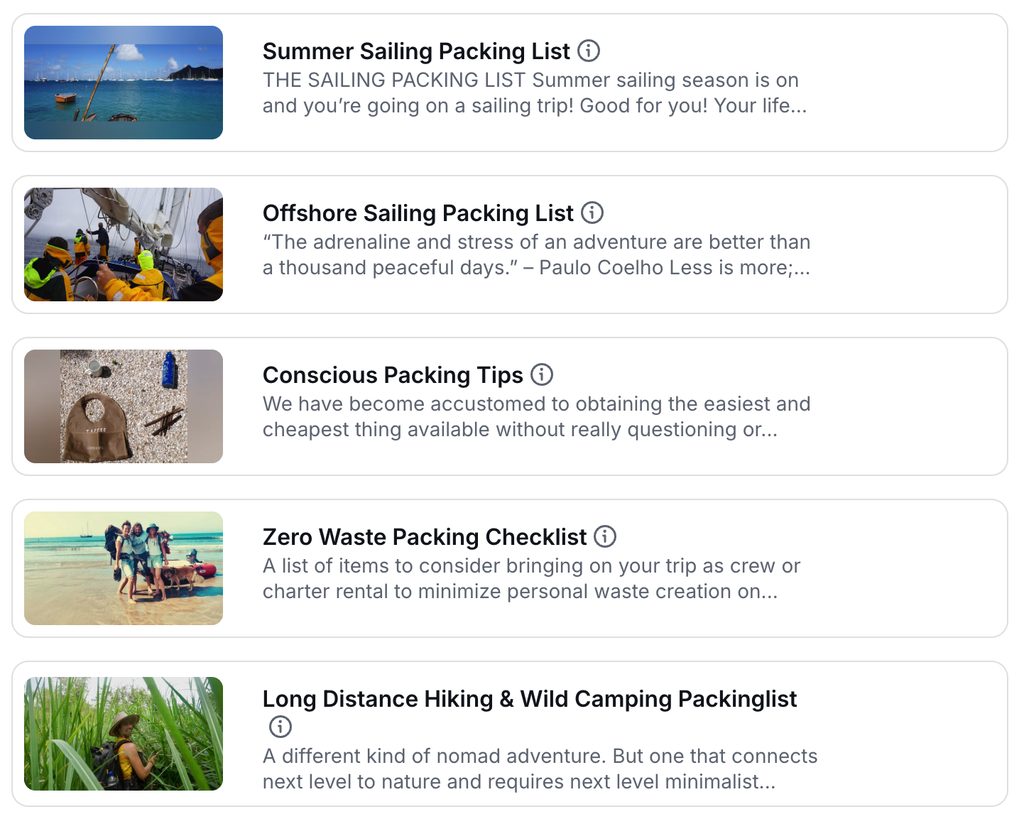
Find extensive packing lists and considerations for both coastal and offshore in the Ocean Nomads Resource Library in the member hub.

9. Provision consciously
Captains usually have their hands full preparing the boat, so as crew you’ll often be part of the provisioning team. A well-fed crew is a happy crew, so plan and execute provisions carefully. Your health and happiness for the next few weeks depends on it.
A big part of your contribution (or destruction) to a healthy ocean starts with the packing and provisioning prep. Buy in bulk, unpack plastic before leaving port, bring reusable containers. The boats with the smallest footprint do this kind of preparation early.
We wrote a whole guide on this: 10 ways to provision for a healthy ocean. Members also get the Provision Planner in the member hub, a calculator that helps you work out what to buy for your crew and passage. Show up as crew with a provisioning plan and you already have one foot in the door with the captain.
Where you provision matters too. Local organic farms keep their business alive, the food is healthier for you and the planet, and it keeps the places we visit authentic. On the Ocean Nomads Map, members pinpoint their favourite local organic provision spots all over the world. So the next time another nomad sails into that bay, they know where to vote with their euros.

10. Give back to the ocean. Make it meaningful.
The ocean is the heart of the planet. Water covers more than two thirds of the Earth’s surface. Ocean plants produce most of the oxygen we breathe. The deep waters are home to wildlife, including some of the biggest creatures on earth. The ocean gives us food, jobs, life, play, sailing. It gives us everything. Without it, we cannot survive.
By experiencing the ocean first hand on a boat, you’ll be amazed by its beauty, gain a deep respect for its power, and also see its decline.
As ocean users, it’s our responsibility to become part of the solution, not the problem. Many solutions are in the hands of governments, policymakers, and corporations. But we don’t have time to wait for politicians to put the ocean on their agenda. We can travel oceans, do good, save money, and have fun. When we plan, prepare, and make conscious decisions, we minimise our negative footprint and maximise the benefits for the places we visit and the planet as a whole.
The pursuit of a healthy ocean and a healthy lifestyle are one and the same. Connect to nature. Prioritise play. Say no to plastic. Fix, create, simplify. Use what you have. Buy little, buy local. Explore more. Team up. Walk your talk. Stay curious, stay wild, stay pure. Eat plants. Spread kindness. Be aware of your privileges and act accordingly. Use your superpowers. Have breakfast straight from the pan now and then. You’ll save dishes. And water. And time. If we all do a little of this every day, a healthier ocean is the way.

Inside Ocean Nomads, members log their actions for the ocean in the Ripple Log. Join the network and make your sailing more meaningful.
“Our actions over the next ten years will determine the state of the ocean for the next 10,000 years.”
Sylvia Earle
Bonus tip: Don’t book a return ticket
An Atlantic crossing rarely goes as planned. Avoid stressing the captain because you have a plane to catch. Above all, chances are you’ll be hooked and you’ll want to keep going.
If you sail east to west to the Caribbean, you have a paradise cruising ground ahead of you where many sailors are happy to take you on board. We’re here to help you accelerate towards a more sustainable ocean nomad lifestyle.
Sail the Atlantic with Ocean Nomads
Now and then we also organise trips across the Atlantic, between the Canary Islands and Cape Verde and on other stretches of ocean. We sail on tall ships and partner boats. Explore our trips page to see the current possibilities.
If you want to cross with a vessel you can trust, a captain you can talk to, and a crew that’s been carefully selected to share the experience with you, this is one of the best ways to make it happen. See where we’re sailing next.
Want to go deeper?
Inside the Ocean Nomads community is a full Sail the Atlantic as Crew resource library covering everything I couldn’t fit in this blog post:
- Atlantic sailing routes and distances
- When to sail across
- How long it actually takes
- Real cost breakdowns
- North Atlantic weather
- What kind of boats you’ll find
- The 3 main methods for finding a boat
- Which harbours to go to
- Which crew websites to register on
- The Ocean Crew Safety Checklist
- Member Atlantic stories
- Photos, highlights, and film of the Ocean Nomads Atlantic crossings
- The Atlantic Crew Report (10 years of survey data from 131 sailors)
Plus packing lists, freedive tips, member trip stories, and the rest of the resource library. For full guidance, all the tools, and step-by-step support, the Zero to Ocean Nomad course is where it all comes together. I hope to see you in the network. It’s everything I wished for when I set out exploring the world by sail more than a decade ago now.
Make it happen
At the end, sailing across the Atlantic as crew is common sense, following your instinct, and one big adventure. But being well-informed and prepared is key for a happy, safe, and meaningful experience. That’s why we set up Ocean Nomads. To connect more of you to the ocean. To each other. And to the boats that can carry you.
If sailing across the Atlantic has been on your mind, here are the next steps you can take:
- Download the free offshore crew checklist
- Join the Ocean Nomads community to network with boats, captains, and find support and crew opportunities.
- Take Zero to Ocean Nomad, the full toolkit. 55+ video lessons, Safety Scorecard, the AI Crew Coach, the Route & Season Guide, Crew Chart, The Atlantic Crew Report, and all the tools to make the dream real.
- Explore our trips page to see the current possibilities. Think Atlantic crossings or shorter stretches like the Canaries to Cape Verde.
- Read the book Ocean Nomad for the original guide.
- Explore more tips and stories on our blog, on our Youtube channel, and join our free Full moonly newssplash.
- Take the survey if you’ve already crossed and want to add your story to the next edition of The Atlantic Crew Report.
More tips and tales to live a little wilder
Enjoy and ahoy,
Suzanne 🧜♀️💙
“Ocean Nomad: A highly organized and helpful book with routes, ports, websites, and even some of the bars you should hang out or go dockwalking to find your ride. Clear thinking and attention to details make Ocean Nomad useful to any captain or crew for an ocean passage. Her passion for conservation and sustainability offers insight into a ‘vagabond’ lifestyle that is also socially responsible.”
Yachting World
This content has originally been published in Yachting World.