In December 2014 I stood on a marina pontoon in Gran Tarajal, Fuerteventura, hours before the boat I was supposed to cross the Atlantic on would sail. My bag was packed. My family thought I was halfway to the Caribbean. Instead of stepping aboard, I picked up that bag and walked away.
It cost me money, pride, and weeks of starting the boat search all over again. It was also the best sailing decision I have ever made.
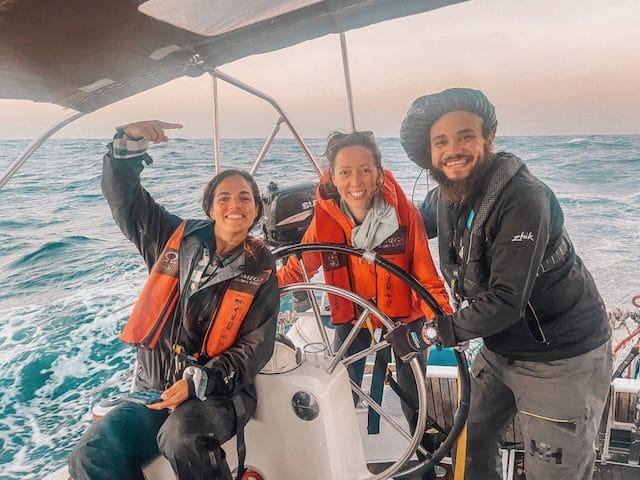
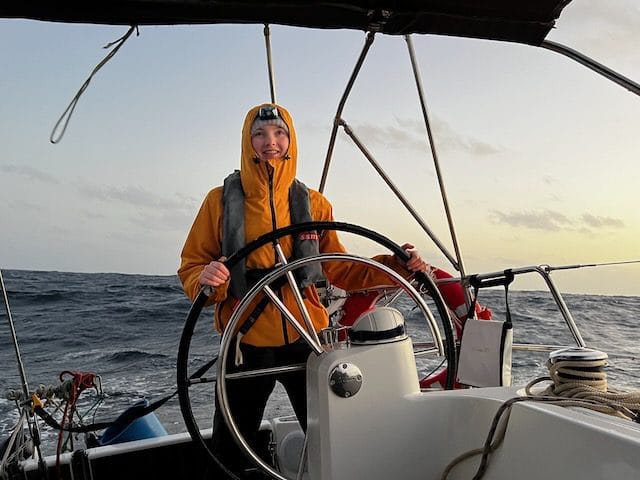
Since then I’ve crossed the Atlantic five times on other people’s boats, and between our captains, members, and crew reports we’ve heard hundreds of crossing stories. So believe us when we say we’re not here to make you scared of sailing. Stepping on boats with strangers gave many of us the best years of our lives. But there is a difference between adventure and unnecessary risk, and you can learn to see it before you step aboard, even if you’ve never sailed a mile.
These are the seven red flags we check. I break them down in the video, and below is what to actually ask and look for when you’re standing on that pontoon yourself.
1. Alcohol on board
A drinking culture offshore is a red flag, because every emergency at sea needs clear heads within seconds. Ask casually over coffee: how does drinking work on board once we’re offshore? A good captain has a clear answer. Our own trips run alcohol-free at sea, and there’s a reason for that.
2. A fresh refit that hasn’t been tested
Everything new breaks once. You want that to happen near a harbour, not a thousand miles from one. Ask: what did you change on the boat this year, and how many miles have you sailed since? On the boat I walked away from, the refit was still going the week of departure and something new broke every single day.
3. No reliable communication gear
Ask what’s on board: satellite communicator, EPIRB, VHF. Then ask when it was last tested. One of our members came home after his boat went down 400 nautical miles from shore, because someone on land was following his tracker and raised the alarm. Offshore, this gear is survival equipment.
4. A captain who wants you in their cabin
No discussion on this one. Sleeping arrangements are agreed before you commit, and a captain who pushes here is telling you everything you need to know. On that 2014 boat I was expected to share the captain’s cabin. I wish I’d trusted my stomach the moment it came up.
5. A captain who shrugs at the weather
Ask how they plan a passage around weather. If the answer is a shrug and “I know the area”, be careful. That same 2014 captain sailed the crew out for fun into a storm that had been announced on the radio. They lost the dinghy’s oars, half the crew was throwing up, and there was a Mayday on the VHF that night. You can’t outrun a storm in a sailboat. You can only plan not to be in one.
6. A captain who is stressed all the time
Watch how they handle small problems in the marina: a late delivery, a jammed winch, a crew question. That’s how they’ll handle big ones at sea, amplified. Stress on shore becomes something else entirely three days offshore.
7. Thin safety equipment
Ask to see it: life raft service date, EPIRB registration, jackstays, tethers, flares in date. Asking is not rude. A good captain is proud to show you. A bad one gets defensive, and that reaction is itself an answer.
The boat I walked away from
Eight people on a 44ft boat, a refit that never ended, crew kicked off while their money stayed behind, and a captain running on Coke and Red Bull who sailed into an announced storm for fun. I counted nine warning signs in three weeks and talked myself past most of them, until the last day. More on that boat in how to find a sailboat ride.
One flag or several?
Sailing will never be perfect, and there will always be small things that don’t match your preferences. These seven go beyond discomfort. One serious red flag can be enough to walk away. Several together make the decision easy.
Free offshore safety awareness check: a mini guide to run through before you say yes to any boat. Download it here.
Want the full framework?
This video is one of 55 lessons in Zero to Ocean Nomad. Module 5 is all safety: the red flags, the green flags, and the 54-checkpoint Safety Scorecard we wish had existed in 2014. In the Ocean Nomads network, members also share notes on captains and boats they’ve actually sailed with. And if you’d rather do your first crossing on a boat where this homework is already done, come sail with us.
There are thousands of boats out there. You don’t need to say yes to the wrong one just because you’re excited to finally get offshore.
Suzanne van der Veeken is a Yachtmaster Offshore captain, has crossed the Atlantic five times as crew, and wrote Ocean Nomad.
Come sail with us. 💙
New to sailing life? Start with the course
Zero to Ocean Nomad takes you from no boat and no contacts to your first ocean passage as crew. It covers finding a boat, checking the captain, preparing, and looking after yourself at sea.
More tips and tales to live a little wilder
- How to find a sailboat ride: a snapshot from a decade of doing it
- Travel across the Atlantic by sailboat: 10 tips for a happy and safe ocean adventure
- Humans on a sailing expedition: why some trips click and others don’t
- Member spotlight: Eoin Keyes, boat owner, surfer and skipper
- Why we created Ocean Nomads