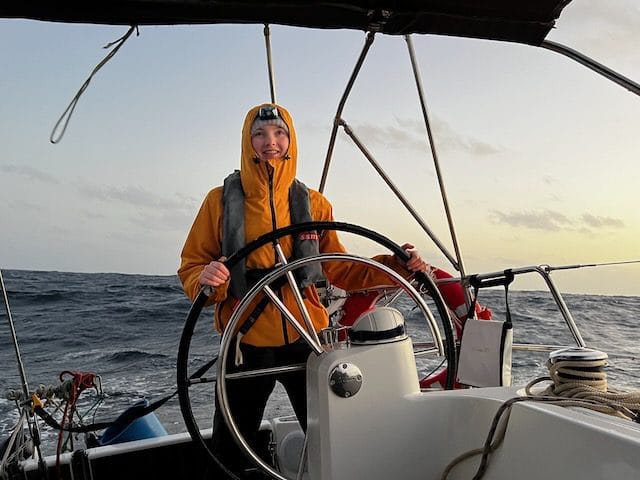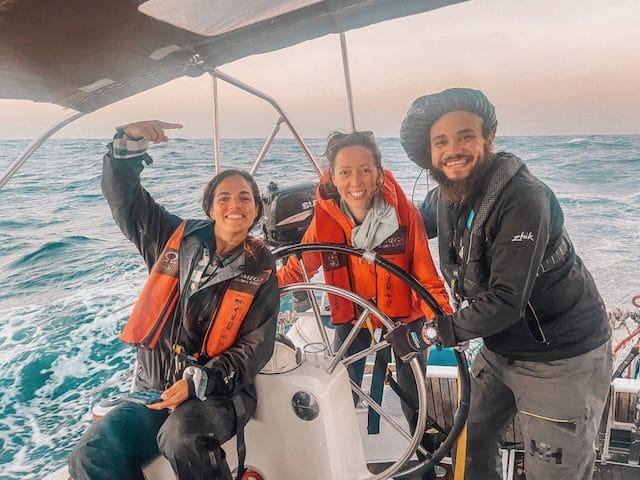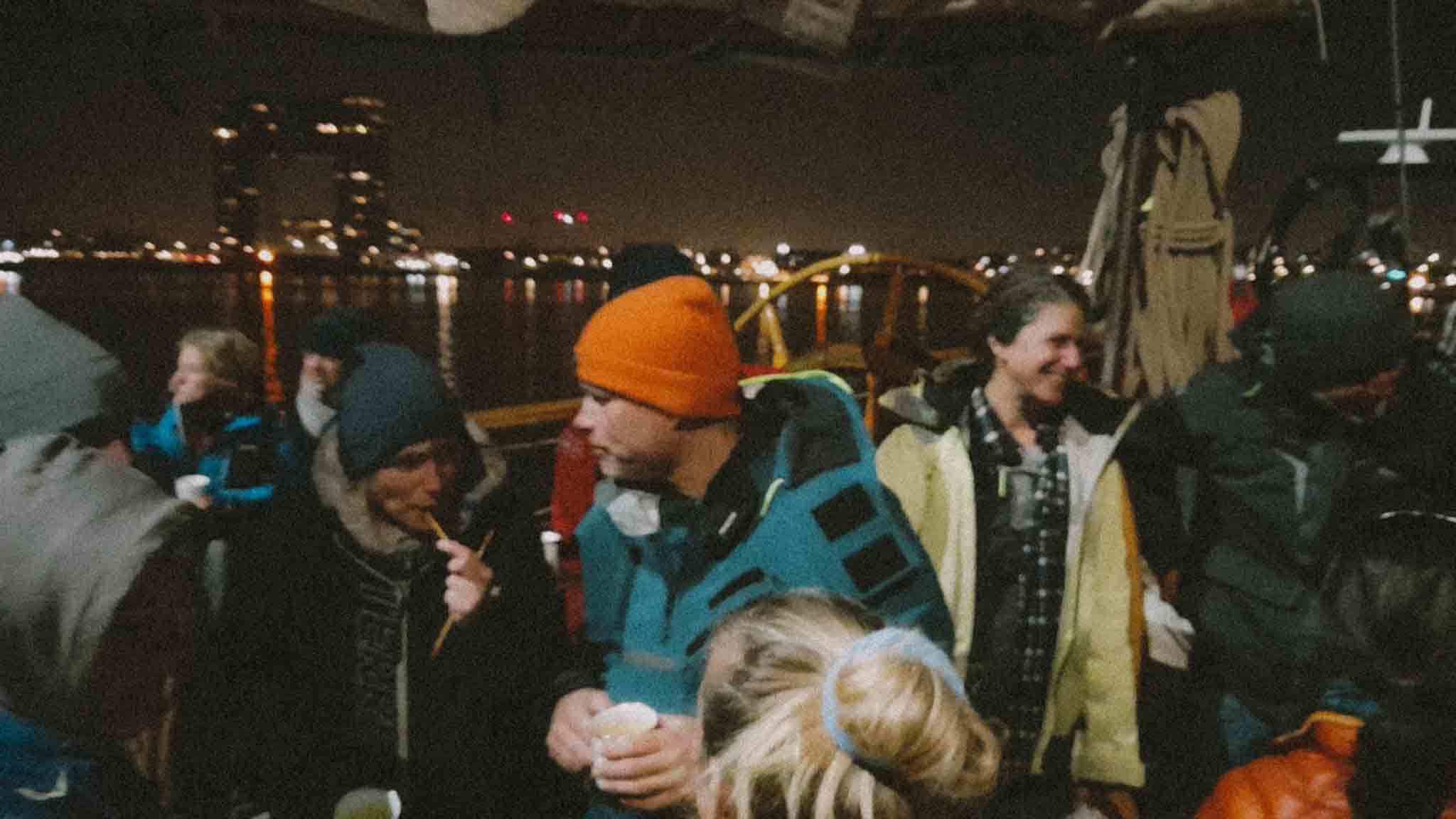
Almost every day someone asks us: how do you find a sailboat to travel with? Or, do you know a boat going to [fill in the blank]?
Thousands of sailboats are out exploring the world, and many take crew. Most people who dream about it never step aboard, and not because they can’t sail. They just never get close enough to the boats. That was me (Suzy) a decade ago. I had no sailing contacts, no boat, and no idea how people actually got invited on board. I just knew I wanted in.
This is a snapshot of what I’ve learned since, from crossing the Atlantic five times as crew, sailing in all five oceans on boats I didn’t own, and eventually earning my Yachtmaster Offshore, mostly by doing rather than by following the traditional path. Finding a boat is the easy part. Finding the right boat, with the right people, is harder, and it matters more than most people realise, because you can’t hop off an ocean halfway.
I watched too many good people end up on the wrong boats, or not leave at all, because the sailing world looked closed unless you already knew someone inside it. So here is the overview I wish I’d had.
Three ways to find a boat
There are three ways in:
- Online. Crew websites, sailing forums and social media groups. There are a lot of boats listed but very little context, so it’s easy to start and hard to know who you’re actually dealing with.
- In person. Go to a sailing hub like Las Palmas in November and walk the docks. Fewer boats than the internet, but you see the boat, meet the captain, and build trust face to face.
- Through people. Most boats never get publicly advertised. They move through friendships, marina conversations, and someone remembering your name.
If you’re new to this, combine online and people: get findable, join a community, then go to the marina once you have a real conversation going.
There are far more than three ways once you go deep: which platforms are worth your time, how to build a profile captains actually answer, the message that gets a yes, the seasons and harbours for every route. We cover all of that step by step inside the Zero to Ocean Nomad course. Here I’ll keep it to the map, not the whole toolkit.
This short video walks through finding boats online:
The fears that stop most people
The thing that stops most people is rarely the boat. It’s the voice at 11pm wondering whether people like them actually do this. The five we hear most:
- “I don’t have enough experience.” Many cruising captains happily take one or two willing beginners. In a 10-year study of 131 crew, more than half had never sailed before. Reliability matters more than miles.
- “I’m too old.” Our members include sailors in their sixties and seventies crossing for the first time. Guido crossed at 68. The body adapts.
- “I’m scared of the people.” Reasonable. That is exactly why you video call, ask for references, and meet on the dock before you commit.
- “What if I get seasick?” Common in the first day or two, and everyone responds differently to medication. Most people find their rhythm within a few days. (I get seasick. It’s fine.)
- “People like me don’t do this.” They do. They just usually don’t start until someone shows them the door is open.
None of these fears are irrational. They also don’t survive contact with the actual experience of being on a boat. We work through each one properly, plus how to vet a boat and a captain, inside the course.
Why I walked off my first boat
The first sailboat I was going to cross the Atlantic on sounded amazing online, all adventure and sustainability and a crew from all over the world. The sail from Fuerteventura to Las Palmas was rough, with five of us seasick. Then in the marina we found the water tank leaking, bugs in the food, and something new every day that hadn’t been mentioned. Departure kept slipping, and I lost trust in the situation. So I left, and found a different boat.
That decision cost me money and days I hadn’t planned for. But the second boat made the crossing, and that trip changed everything. The lesson stuck: trust your gut, and if a boat doesn’t feel right, it’s okay to walk. There is always another boat. That’s also why we built the network, so nobody has to walk into Las Palmas alone in November with nowhere to sleep and no boat left to try.
What captains actually want
Between our skipper team and the members who keep getting invited back, the pattern repeats. Captains aren’t looking for another expert sailor. They want someone useful to have on board:
- Calm when things get lively
- Reliable and clean
- A sense of humour
- Keen to learn
- Flexible with timing, destination and budget
- Able to make a decent meal from three onions and a tin of tomatoes
Certifications and ocean miles help. What gets you the second invitation is usually higher up that list. Once you’re aboard, the daily job is watchkeeping. If you’re wondering whether you need experience first, this companion post answers it, and our 10 tips for a happy Atlantic crossing cover preparing for the passage itself.
Why a network beats going it alone
You can find a boat on your own, but the people who go furthest almost never do. A listing can’t give you the two things that matter most at sea. One is safety. A network gives you context the internet can’t, boats other members have actually sailed on, references you can trust, and people who notice when you go quiet. When you’re about to hand weeks of your life to a stranger on a small boat far from land, that context is everything.
The other is finding people you actually click with. Matching dates and routes is the easy part. The hard part is finding crew and a captain who share your values and your vibe, the ones you’d happily live alongside in a small space for weeks. That is what makes or breaks a trip, and it’s the thing a database will never sort for you. Your first boat is rarely your last, either, and the people you meet become the crew calls and boat introductions for years after. For most of us, a community is where independent sailing actually begins.
Why I started Ocean Nomads
For years people kept asking me the same thing. Do you know a boat going here? Do you know someone sailing there? And there was almost always someone who knew something. That is the whole idea behind Ocean Nomads, which I started in 2020. Out here, we need each other.
I have been on every side of this story, as crew, as a captain, as a boat owner, and as an expedition organiser. From all of those angles the same thing holds. When the boat, the people and the values line up, the experience can be amazing. When they don’t, it can be miserable, and sometimes unsafe. A community is how you tip the odds toward the good version, and how you find the people you actually want to sail with.
So Ocean Nomads exists to connect people to the ocean, and to connect people to each other. Because when you finally get out there, the ocean gets into your heart. And once it’s in there, you find the energy, almost superpowers, to do something to protect it.
Where to start this week
- Get the free crew checklist. 50 steps to prepare before you join a boat, including what to agree with a captain before you commit. Download it here.
- Go deep with the course. The Zero to Ocean Nomad course walks you through finding your boat, vetting safety and fit, and getting ready to go.
- Join the network. Members find boats through introductions and a members map, and get our full Atlantic crew guide inside the Resource Library. Come aboard.
- Or just come sailing with us. Coastal trips and ocean passages with people we know, on boats we know. See where we are sailing next.
Common questions
Do I need experience to crew on a sailboat?
No. Plenty of cruising captains take willing beginners, because reliability and the ability to learn fast matter more than logged miles. We welcome people without experience too, and on most of our own trips no experience is needed.
How much does it cost to join a boat as crew?
It varies widely. On private boats, most captains ask a daily contribution toward shared costs like food, fuel and marina fees, and some take crew for free. Organised trips charge a fixed fare. On top of that you cover your own flights, travel insurance and personal gear.
How long does it take to find a sailboat ride?
It depends on how you look. From databases alone it can take a while. In a busy sailing hub in season, with a couple of clear weeks on the ground, most willing first-timers find something within a few weeks. Through a community it usually happens within a single season.
Suzanne van der Veeken is a Yachtmaster Offshore captain and the founder of Ocean Nomads. She has crossed the Atlantic five times as crew, sailed in all five oceans on boats she didn’t own, and is the author of Ocean Nomad.
Somewhere this year, a boat will leave the Canary Islands with people who were strangers a month earlier. One of those boats is ours. Come sail with us. 💙
New to sailing life? Start with the course
Zero to Ocean Nomad takes you from no boat and no contacts to your first ocean passage as crew. It covers finding a boat, checking the captain, preparing, and looking after yourself at sea.