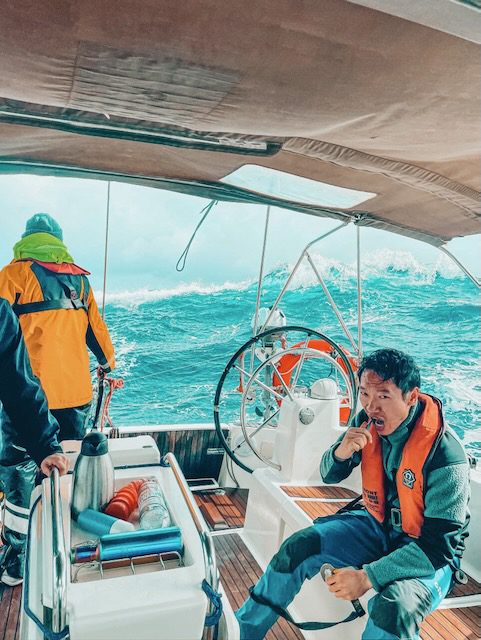
Sailing across the Atlantic takes 18 to 25 days on the classic trade wind route from the Canary Islands or Cape Verde to the Caribbean, and 21 to 30 days on the return via the Azores. A 40-foot monohull averages around 100 nautical miles per day. A 50-foot boat averages 150 to 200. The fastest recreational crossings clock in under 12 days; the slowest we’ve heard of took 40 days when the wind never showed up. Actual time depends on the boat, the wind, and the route you pick.
Almost every question we get about the Atlantic starts with time. How many days will it take? How long am I away from home? How long is my phone off? At Ocean Nomads we’ve been sailing Atlantic crossings for ten years and collecting numbers from other crossers in our 131-sailor Atlantic Crew Report. Here’s the picture, drawn from my (Suzy’s) own logbooks on Sea Ya and Eau Too, and from the log of SV Twister.

So how long does it actually take?
The trade wind route east to west (the classic milk run from Europe to the Caribbean) takes 18 to 25 days for most boats. The return east across the Atlantic via the Azores takes 21 to 30 days. Both windows can stretch or compress depending on wind, boat, and how much fuel you’re willing to burn.
These numbers aren’t records. They’re what happens on a well-run cruising crossing on a boat between 40 and 60 feet in trade wind season. Racing yachts are faster (the outright transatlantic sailing record is under three days). Small boats without an engine to keep speed through calms are slower (three of the sailors in our crew report took over 30 days). But 18 to 25 is where most people land.
Atlantic crossing times at a glance
- Canaries to Cape Verde (leg 1 of the milk run): 850 nautical miles, typically 5 to 8 days, fast boats 4, slow boats 12. November to February.
- Cape Verde to the Caribbean (leg 2 of the milk run): 2,100 to 2,300 nautical miles, typically 14 to 21 days, fast boats 11, slow boats 30 or more. November to February.
- Canaries direct to the Caribbean: 2,700 nautical miles, typically 16 to 21 days, fast boats 12, slow boats 28. November to February.
- Return via the Azores (Caribbean to Europe): 3,300 to 3,800 nautical miles, typically 21 to 30 days, fast boats 17, slow boats 40 or more. May to June.
- Northern route (Bermuda to the Azores): 1,800 nautical miles, typically 10 to 16 days, fast boats 8, slow boats 21. May to June.
These are boat-in-motion numbers. If you’re counting the whole trip (fly to the marina, prep, provision, cross, arrive), add three to seven days on each end.
The trade wind crossing: Canaries or Cape Verde to the Caribbean
This is the crossing most sailors mean when they ask how long. Europe to the Caribbean, downwind, in northern hemisphere winter, on the back of the northeast trade winds.
On Sea Ya, a 44-foot ketch, the Cape Verde to Tobago leg was 2,262 nautical miles in 18 days. On Eau Too, a 57-foot monohull sailing with the ARC+ rally, São Vicente to Saint Lucia was 2,200 nautical miles in 17.5 days. Two boats, similar route, different weather. The Eau Too crossing had ten days of hardly any wind, and only stayed on schedule by running the engine to keep a 120-mile daily average. The trades aren’t a guarantee. They’re a probability.
The full two-leg version (Canaries to Cape Verde, then Cape Verde to the Caribbean) adds five days on the water plus about a week in Mindelo. So the whole trip runs 25 to 32 days boat-in-motion, and closer to five to six weeks if you count the Cape Verde stopover. About two-thirds of milk run boats sail direct and one-third stop in Cape Verde.
The return east: Caribbean to Europe via the Azores
Going back the other way is slower and more variable. The northern route from the Caribbean (usually starting from Antigua, Bermuda, or the BVI) to the Azores runs 1,800 to 2,200 nautical miles depending on your departure point, and it usually takes 15 to 21 days. From the Azores you either continue north to Ireland, east to Portugal, or northeast to the English Channel and up to the Netherlands. That second leg typically adds another 7 to 12 days.
Total time east: 21 to 30 days, with wider variance because you’re not on trade winds. You’re threading between the Azores High and the North Atlantic low-pressure systems, which means both calms and gales in the same crossing. Most boats leave the Caribbean in late May or early June and reach Europe by early July.
What makes a crossing faster or slower?
Five factors decide whether your crossing lands on the fast end of the window or the slow end.
- Boat length. A 30 to 40 foot monohull averages about 100 nautical miles a day. A 50-foot boat averages 150 to 200. A catamaran can be 20% faster in the trades.
- Wind reliability. Solid trades hold 15 to 25 knots for weeks. Weak trade wind years can add 5 to 10 days.
- Using the engine. Engineless boats that sail through calms take longer. Boats that motor 6 to 8 hours a day through light patches shave days off.
- Route choice. Boats that dive south to 15°N pick up stronger trades but sail more total miles. Boats that cut the corner save miles but risk calms.
- Departure timing. Leaving early November means less-established trades. Leaving mid-December to mid-January hits the peak trade wind window.
One sailor in our Atlantic Crew Report described a Caribbean-to-England crossing that took 40 days because the wind never showed up. It’s a real outlier but worth planning for. Take enough food and water for at least 30 days on the classic milk run, and 40 on the return via the Azores.
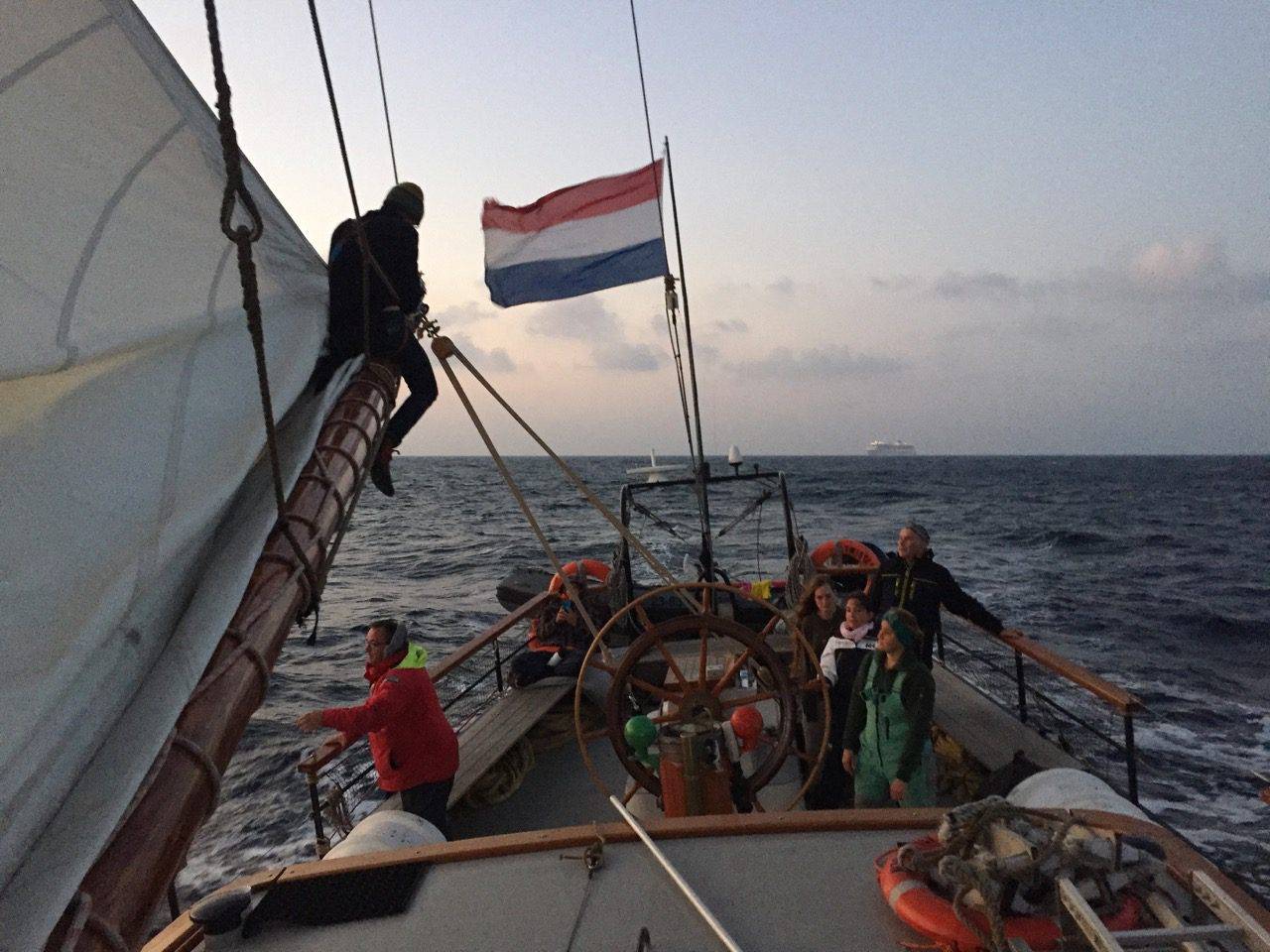
Right now in the Ocean Nomads network (member cards, 29 October 2026)
- 7 boats welcoming crew, 4 of them looking for crew right now
- 40 sailors available to crew short term, 20 for the long haul
- 12 captains and mates available to sail
- 37 members open to meetups and hosting, 18 with a basecamp or a bed to offer
- 161 members with a pin on the map, from Tenerife to Grenada
Crew spots and boat calls go to members first. Join the network and we meet at every new moon.
More answers, from people who have done it
This post covers the time. The rest of the questions (which boat, which captain, what to pack, how to find a berth, what it costs, what a day at sea is like) get asked every week inside the Ocean Nomads network, and answered by sailors who have crossed. Crossing this season? The Atlantic crew toolkit has the full Atlantic Crew Report, the routes and timing, the safety checks and new boat opportunities every Monday, with a year in the network. A good place to start is our 10 tips for a happy and safe Atlantic crossing. Then come ask your own questions inside.
Common questions
How long does it take to sail across the Atlantic in a sailboat?
18 to 25 days for the classic east-to-west trade wind route from the Canary Islands or Cape Verde to the Caribbean, on a 40 to 60-foot boat. 21 to 30 days for the return via the Azores.
How many nautical miles is it across the Atlantic?
Around 2,700 nautical miles direct from the Canary Islands to the Caribbean. Split into two legs with a Cape Verde stop, it’s 850 nautical miles then 2,100 to 2,300 nautical miles. The return via the Azores is longer, roughly 3,300 to 3,800 nautical miles total.
How long does it take to sail from the Canary Islands to the Caribbean?
16 to 21 days direct. If you stop in Cape Verde, it’s 5 to 8 days for leg 1 plus 14 to 21 days for leg 2, so 19 to 29 days boat-in-motion plus about a week on the ground in Mindelo.
How long does it take to sail from Cape Verde to the Caribbean?
14 to 21 days for the 2,100 to 2,300 nautical mile crossing. A 40-foot monohull averages around 100 nautical miles a day. A 50-foot boat averages 150 to 200.
What is the fastest Atlantic sailing crossing?
The outright transatlantic sailing record (Ushant to Lizard Point) is under three days, held by racing multihulls. For recreational cruising boats, fast crossings in the trades come in around 11 to 14 days.
What is the slowest Atlantic sailing crossing?
One sailor in our Atlantic Crew Report reported a Caribbean-to-England crossing that took 40 days because the wind never showed up. Slow crossings usually happen on small engineless boats, in low trade wind years, or on the return via the Azores.
How many hours a day do you sail on an Atlantic crossing?
24. The boat sails continuously. Crew rotate in watches of three to four hours around the clock, so at any hour of the day and night someone is on deck.
When is the best time of year to sail across the Atlantic?
Late November through early March for the east-to-west trade wind route. May to June for the return via the Azores. Outside those windows you either risk hurricane season (June to November) or the winter Atlantic depression track (December to April on the northern route).
Ocean Nomads is a community of sailors who cross oceans. This post was written from the collective experience of our members, the captains we sail with, our Atlantic Crew Report of 131 crossers, and Suzanne van der Veeken (Suzy), Yachtmaster Offshore, five Atlantic crossings as crew, who wrote Ocean Nomad: The Complete Atlantic Sailing Crew Guide.
Come sail with us. 💙
Come meet your people
Boats welcoming crew, crew looking for boats, meetups when paths cross, and a map of sailors, vanlifers, hikers and basecamps in all the wild corners of the world. The people who say yes when you need a hand are inside.
More tips and tales to live a little wilder