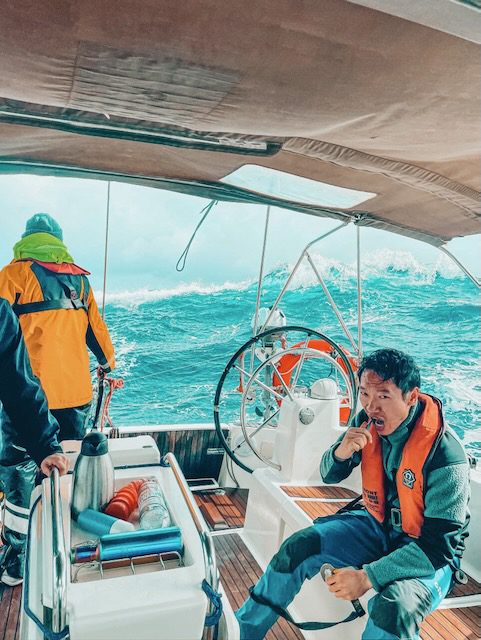
“Sailing across an ocean must cost a fortune.”
It is the assumption almost everyone starts with. It is also usually wrong.
Crossing the Atlantic as crew can cost surprisingly little. Some sailors contribute a few hundred euros toward the boat’s running costs. Some join for free. Once flights, insurance, accommodation and gear are added, others spend a couple of thousand.
But there is another cost that rarely makes it into the budget. Time. Uncertainty. Risk.
A free berth is only cheap if you find the right boat, the right captain, and the right people. You may spend weeks searching, messaging strangers, travelling to meet boats, waiting for weather, and trying to work out whether the opportunity in front of you is actually a good one. And once you are offshore, you cannot simply get off because the boat, the captain, or the crew are not what you expected.
Ocean Nomads has crossed the Atlantic many times, on our own boats, other people’s boats, and with crews from all over the world. So if you are wondering whether an Atlantic crossing is financially out of reach, here is what you actually need to budget for, and what a “cheap” crossing can really cost.
The short answer
As crew on a private sailboat, the crossing itself can cost anywhere from nothing to a few thousand euros. A common arrangement is contributing toward the boat’s direct running costs while aboard: food, fuel, and harbour fees. Some captains take crew for free.
Then come your own costs: getting to the boat, getting home, insurance, accommodation around the crossing, and any gear you need. A realistic trip budget can easily reach 1.000 to 2.500 euros or more.
In our Atlantic Crew Report of 131 sailors, 53% reported paying no passage fee. Sailing across the Atlantic as crew does not have to mean buying an expensive ticket across the ocean.
Three numbers to budget for
The crossing is the cheap number. The trip is the real number. The escape fund is the important number.
Most people ask only the first. The one that actually protects you is the third: money you keep available even if you never spend it, so you can walk away from the wrong boat and still get yourself home.
An example budget
Deliberately broad. Your crossing could fall below or above this, especially depending on flights, how long you wait for weather, and what gear you already own.
- Crew contribution: 0 to 700 euros
- Flights: 200 to 600 euros
- Insurance: 50 to 150 euros
- Accommodation around the crossing: 100 to 500 euros
- Gear: 0 to 500 euros or more
- Trip total: roughly 350 to 2.500 euros or more
The single biggest variable is usually flights, not the crossing. Gear can push the top end higher if you are starting from nothing.
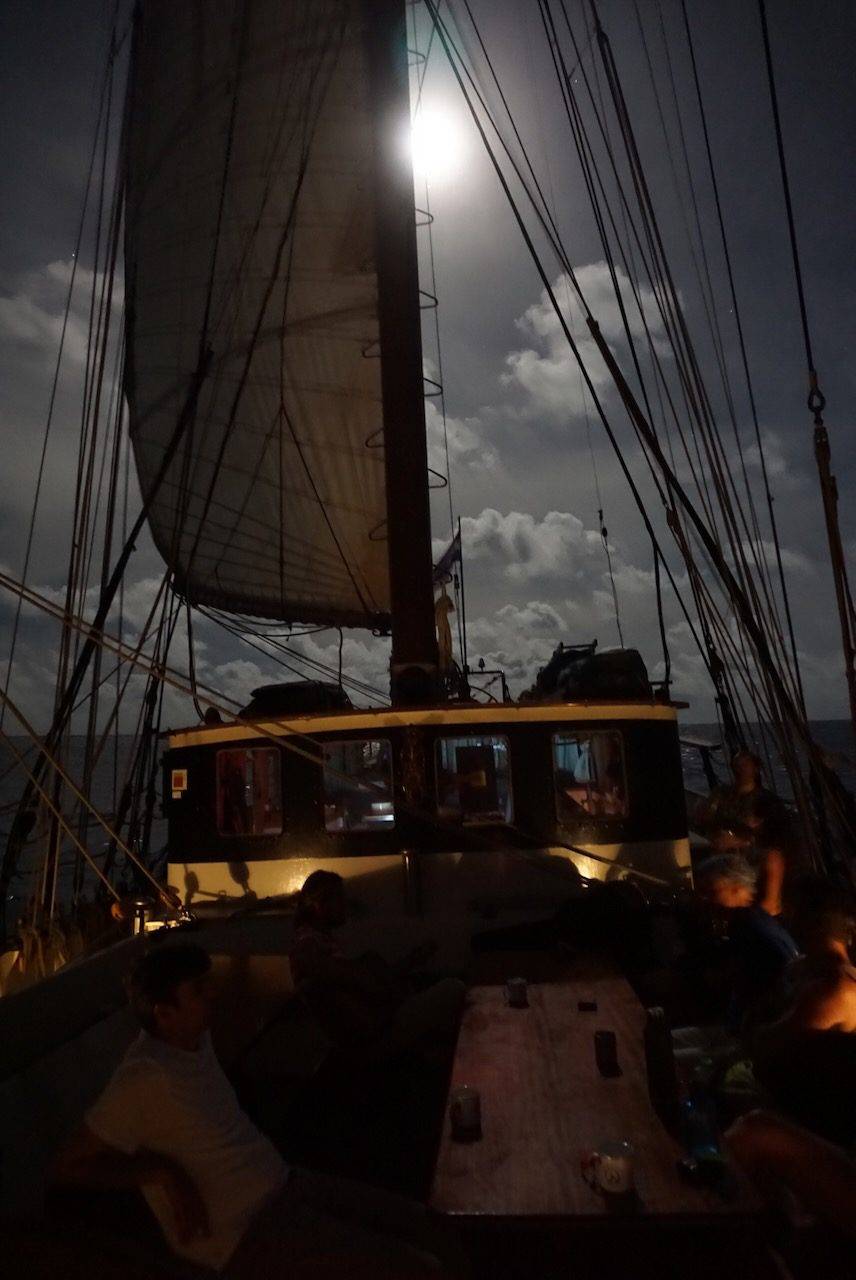
The costs nobody puts in the Instagram post
The daily contribution is the part people budget for. These are the parts they forget:
- Flights to the departure port and home from the arrival port, often the biggest single line
- Accommodation and food before departure (boats get delayed, plan for extra days) and after arrival
- Travel and health insurance that actually covers offshore sailing. Most standard policies exclude it, so check the wording
- Gear: a foul weather jacket, a soft duffel, whatever you are missing
- Visas, depending on the route
- A backup fund, so you keep the freedom to walk away from the wrong boat
That last one matters more than its size. The crew who get stuck on a bad boat are often the ones who cannot afford to leave it.
Four common crew arrangements
Most crew arrangements fall roughly into four models. The money involved depends heavily on the boat, route and arrangement, so treat any figure as an example, not a standard.
- You share the costs. The most common for beginners. No fee for the boat, you chip in on daily running costs like food, fuel and harbour fees.
- You contribute your time instead. With some experience (watchkeeping, cooking, basic navigation) many owners take crew for nothing in return for reliable hands and night watches.
- You pay for structured experience. An organised expedition or mile-builder with real instruction behind it. This is where a fee is fair, because you are getting more than a berth.
- You get paid for your skills. With licenses and real experience, from deckhand day rates up to skipper rates.
Most first-timers land in the first two. In our Atlantic Crew Report, 53% paid no passage fee at all.
You can find rides for 10 euros a day. It doesn’t have to be 25 euros a day. Don’t jump at the first opportunity, it’s your life.
A sailor in our Atlantic Crew Report
The escape fund: the cost nobody plans for
If there is one number to take from this article, it is this one.
Keep money available that you do not intend to spend. Enough to leave a boat that does not feel right, cover a few unplanned nights ashore, and still get yourself home. Not because it usually goes wrong, but because the crew who end up stuck on a bad boat are almost always the ones who cannot afford to walk away.
The freedom to say no is the most valuable thing you can bring aboard, and it costs nothing until the day you need it.
Why some sailors choose an organised crossing
Finding a boat is only the beginning.
You need to work out who the captain is, who else is coming, whether the boat is properly maintained, what your responsibilities will be, how the costs work, what happens if the departure changes, and whether you actually want to spend three weeks offshore with these people.
In our crew survey, sailors told us that if they were doing it again, they would spend more time finding the right boat and the right crew. One put it simply:
Take more time to cross with nice people.
A sailor in our Atlantic Crew Report
A free berth on a private boat might cost almost nothing in money, but it can cost a lot in searching, waiting and uncertainty. You do the checking. You do the messaging. You work out the logistics. You decide whether you trust the captain. And you take the risk of finding out what the boat and crew are really like only once you are already offshore.
An organised expedition changes that equation. You know the boat. You know the skipper. The crew is put together on purpose. The route is planned. The safety standards are clear. You have people around you before you even step aboard.
So the real comparison is not simply cheap versus expensive:
- Do it yourself: lower cash cost, more searching, planning and uncertainty
- Organised expedition: higher cash cost, less searching, more preparation, checking and structure
For a first ocean crossing, that difference can be worth far more than the price of the berth.
What a crew contribution is really for
On a private boat you are not buying a seat. You are joining the running of the vessel and chipping in on what the boat spends while you are aboard: a share of the food and provisioning, fuel, and harbour fees at either end.
A boat owner has poured years, savings, and a lot of love into that vessel, and offshore, the boat and its gear are also what keep everyone alive. Getting to step aboard someone’s ocean home is a gift, not a service you are owed. A fair contribution is not about squeezing the owner, it is about carrying your share so the person who made the adventure possible is not also subsidising it.
A useful rule of thumb: a contribution should relate to the boat’s direct costs while you are aboard, rather than becoming a way for the owner to recover the cost of owning the boat. Always agree exactly what is included before you join, and keep it in writing.

Who pays for what? A simple breakdown
There is no universal rule, and it varies by country, vessel and arrangement. Here is a split that tends to feel fair for recreational crew on a private boat, the kind of trip where you are there to learn and share the adventure.
- Travel to and from the boat: crew
- Groceries and provisioning: shared, everyone eats
- Personal items and gear: crew
- Meals ashore in restaurants: crew (their own)
- Fuel used under way: shared, or the owner’s on a delivery for the owner
- Marina and harbour fees: shared while aboard
- Haul-out and maintenance: owner
- The boat itself, insurance, refit: owner
Crew chip in on what gets used up while they are aboard. The boat itself, its upkeep, its insurance and its refit are the owner’s investment, already far larger than anything crew contribute, and they stay the owner’s.
One thing every sailor agrees on, even when they agree on nothing else: put it in writing before you go. A short message confirming who pays what saves the only argument you cannot walk away from, the one that starts mid-ocean.
The open forums will give you a hundred contradictory answers from strangers you will never sail with. Inside the Ocean Nomads network we have this same conversation, but between people who actually cross oceans together: captains posting their real crew arrangements, crew comparing what they paid and where, and the notes staying searchable for the next person. It is the difference between opinions and a straight answer from someone who has been on that exact boat.
You don’t need to be rich to become an ocean sailor
This is the part that surprises people most. It is rarely about how much money you have. It is about what you choose to spend it on.
I (Suzy) started Ocean Nomads after years of sailing and travelling on a very modest budget. The point was never to become rich enough to sail. It was to build a life where sailing was worth prioritising, and to spend accordingly. The longer you travel, the cheaper it tends to get.
The experience you want shapes the cost
Most people only cross an ocean once, and you want good memories. The type of boat shapes almost all of it.
A charter or racing passage can be a wet, fast sprint with spots simply sold to whoever signs up, and on a booked charter you are stuck with whatever shipmates turn up, even if you do not click, with no chance to meet them first. A boat with space, comfort, a proper watermaker, and a crew you actually chose to sail with is a different trip entirely, even on the same ocean.
Then there are the things that never show on an invoice but shape every single day aboard:
- Does the boat actually sail, or motor most of the way? The magic is in the ones under sail.
- Is it a dry boat or a wet one? Offshore, alcohol dulls exactly the senses everyone needs sharp.
- Vegetarian galley, or not? Fishing on board, or not? Smoke-free?
- Do the people share your values, or are you just booked onto the same hull?
None of that is better or worse in the abstract. It is about matching the boat to the experience you actually want. But for a once-in-a-lifetime crossing, those details are the difference between a trip you treasure and three weeks you endure.
Crew or own the boat?
Worth knowing, because it reframes the whole question. There is a commonly quoted rule of thumb that keeping a cruising boat costs around 10% of its value per year, although real costs vary enormously by boat, location, age, and how much work you do yourself. Owners who track every expense often land in the low tens of thousands a year. Crossing as crew is, by a wide margin, the cheapest way to sail an ocean: you get the miles and the experience, and none of the refit bills.
Ready to work out your own Atlantic budget?
The Zero to Ocean Nomad course includes the full budgeting tool: the crew-cost arrangements, a line-by-line worksheet, and real examples from our network of captains and crew.
Or cross with people who have done it
There is a big difference between finding the cheapest way across the Atlantic and finding a good way to cross it. Most of what a crossing really costs you is decided before you step aboard: which boat, which skipper, and what you agree on.
Safety is not only about the boat. It is also about the people you share it with, and that is the part a price comparison never shows.
The Atlantic crew toolkit helps with exactly that part: the 2026 crew websites and what they cost, the questions to ask before you say yes, new boat opportunities every Monday, and a year in the network with people who have crossed before you. See the Atlantic crew toolkit.
Common questions
How much does it cost to cross the Atlantic as crew?
The crossing itself can cost nothing, a few hundred euros, or more depending on the arrangement. Once you add flights, insurance, accommodation and gear, a realistic trip budget can easily reach 1.000 to 2.500 euros or more. In our Atlantic Crew Report of 131 sailors, 53% reported paying no passage fee.
Do you get paid to sail across the Atlantic?
Rarely as a beginner. Experienced crew on deliveries can be paid or have costs covered. First-timers usually contribute to shared costs instead.
Is it cheaper to crew or to own a boat?
Far cheaper to crew. Keeping a cruising boat is often quoted at around 10% of its value per year; crossing as crew can cost a few hundred euros plus travel.
How much money should I have available before I go?
More than you plan to spend. Beyond the crossing and travel costs, keep a backup fund so you can leave a boat that does not feel right and still get yourself home.
What is a fair crew contribution?
Enough to cover the boat’s direct daily running costs while you are aboard, food, fuel, harbour fees, and never a passage fee or a share of the boat’s upkeep. Agree it in writing.
Ocean Nomads is a community of sailors who cross oceans. Written from the collective experience of our members, the captains we sail with, our Atlantic Crew Report of 131 crossers, and Suzanne van der Veeken, author of Ocean Nomad.
Come sail with us. 💙
Come meet your people
Boats welcoming crew, crew looking for boats, meetups when paths cross, and a map of sailors, vanlifers, hikers and basecamps in all the wild corners of the world. The people who say yes when you need a hand are inside.