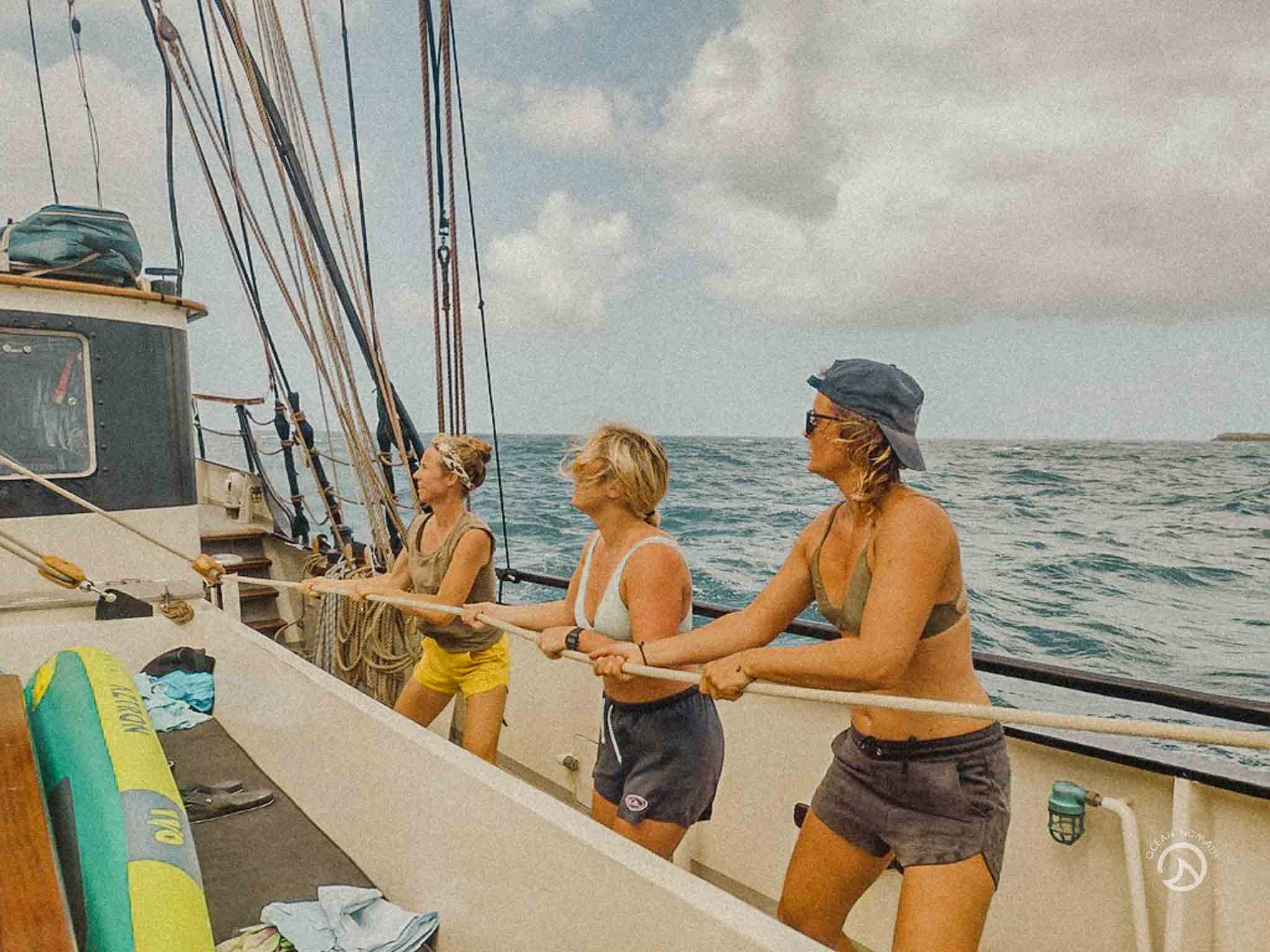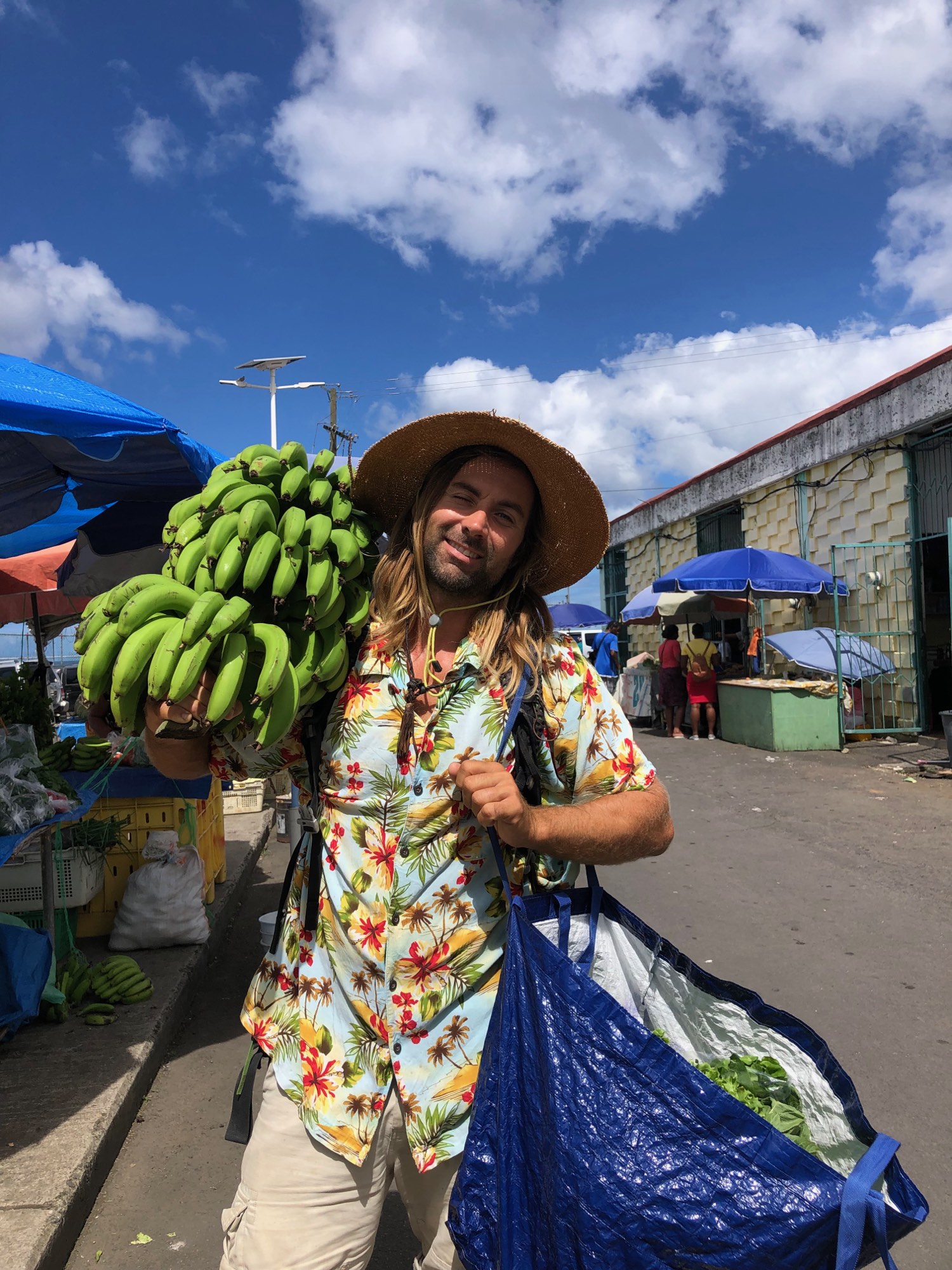
“On my first ocean crossing we were down to eight apples, one paprika and a lotttt of red onions in the fresh department, with still a week of sailing to go. We had plenty of food, just not much fresh. I still struggle with red onions to this day, and I treasure every piece of fresh food. On another Atlantic crossing the Caribbean was on the horizon and we were still eating delicious meals with fresh veggies, all the colours of the rainbow.”
Suzanne
Food is one of the biggest happiness and health factors on any sailing trip. Whether we’re provisioning for an Atlantic crossing, a coastal trip or a weekend sail, we try to make our food choices work for both a healthy crew and healthy ocean.
Between us the Ocean Nomads crew have organised more than 30 trips and expeditions and provisioned everything from weekend sails to ocean crossings. We’ve made most of the provisioning mistakes so you don’t have to.
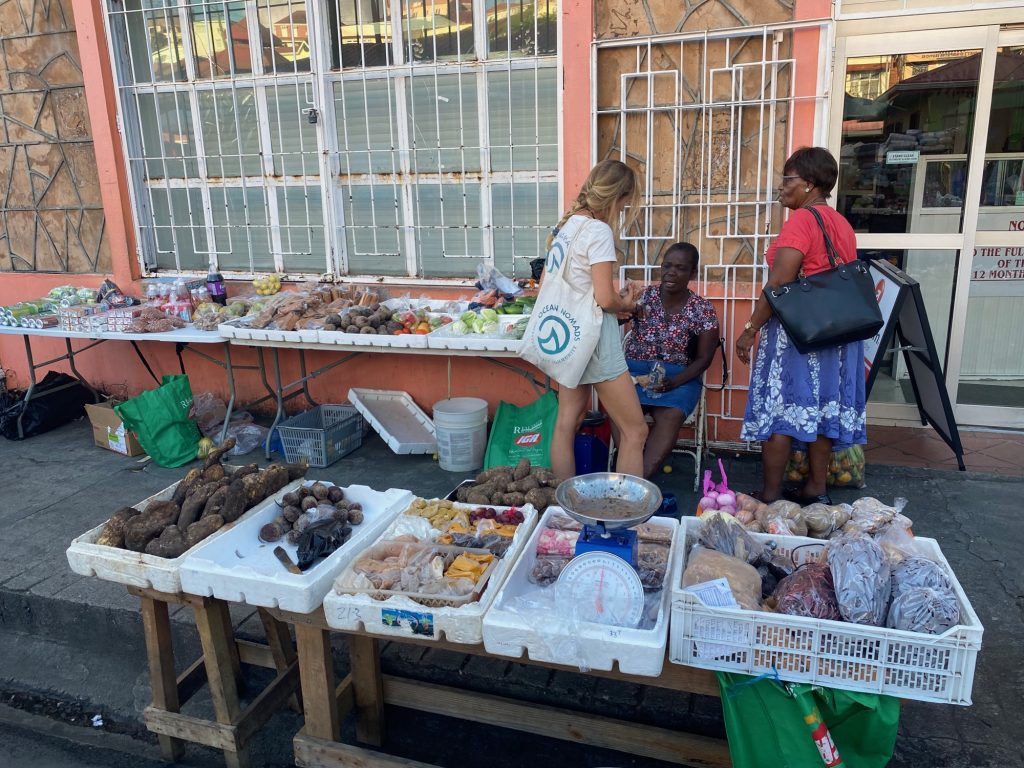
Sourcing local spices on the street.
Here are 10 of the ones that make a big difference:
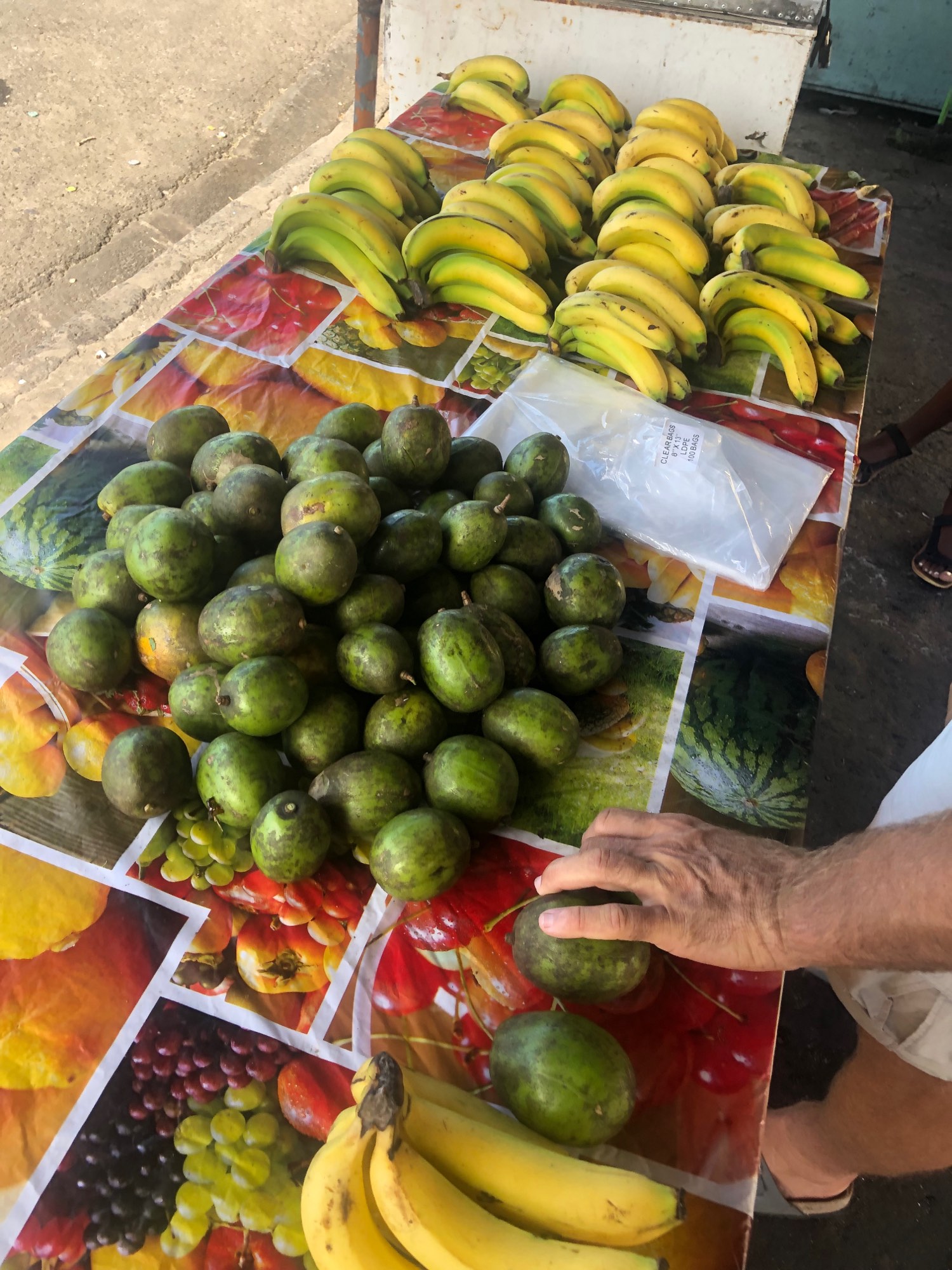
- Shop the local market, not the supermarket. Fresh, seasonal produce often lasts surprisingly well on a boat when you choose the right things, and you avoid A LOT of plastic and packaging. Plus your money goes straight to the people who grew it. Ask for the stuff that has recently been picked and hasn’t ripened yet.
- Buy loose and in bulk, and bring your own bags, buckets and jars. Less to stow, and far less to carry back off at the other end. Big containers are great for grains, nuts, seeds. Small containers for the loose teas, herbs, and spices.
- Take the packaging off before you leave the dock. Everything you carry aboard you carry back off again, onto islands with barely any recycling, so the less that comes with you the better.
- Make your own where you can: bread, yoghurt, granola, sprouts. Cheaper, healthier, no wrapper, and weirdly satisfying to pull off at sea.
- Choose whole grains over white. Whole grain rice, pasta and flour keep you fuller and your energy steadier through a night watch, so you are not raiding the snack locker an hour after dinner.
- Sprout something green. A jar of sprouting lentils or seeds gives you fresh greens the whole way across, long after the salad has gone.
- Swap single-serving snacks for nuts, dried fruit and homemade energy balls. Those little wrappers are the ones that blow off the deck and into the sea. It’s easy to make some of your own delicious snacks.
- Cook with seawater when it makes sense. It can save precious tank water and salts things like rice or pasta. Where we know the water is clean, we sometimes replace part of the fresh water with seawater. Start small, you can always add more salt.
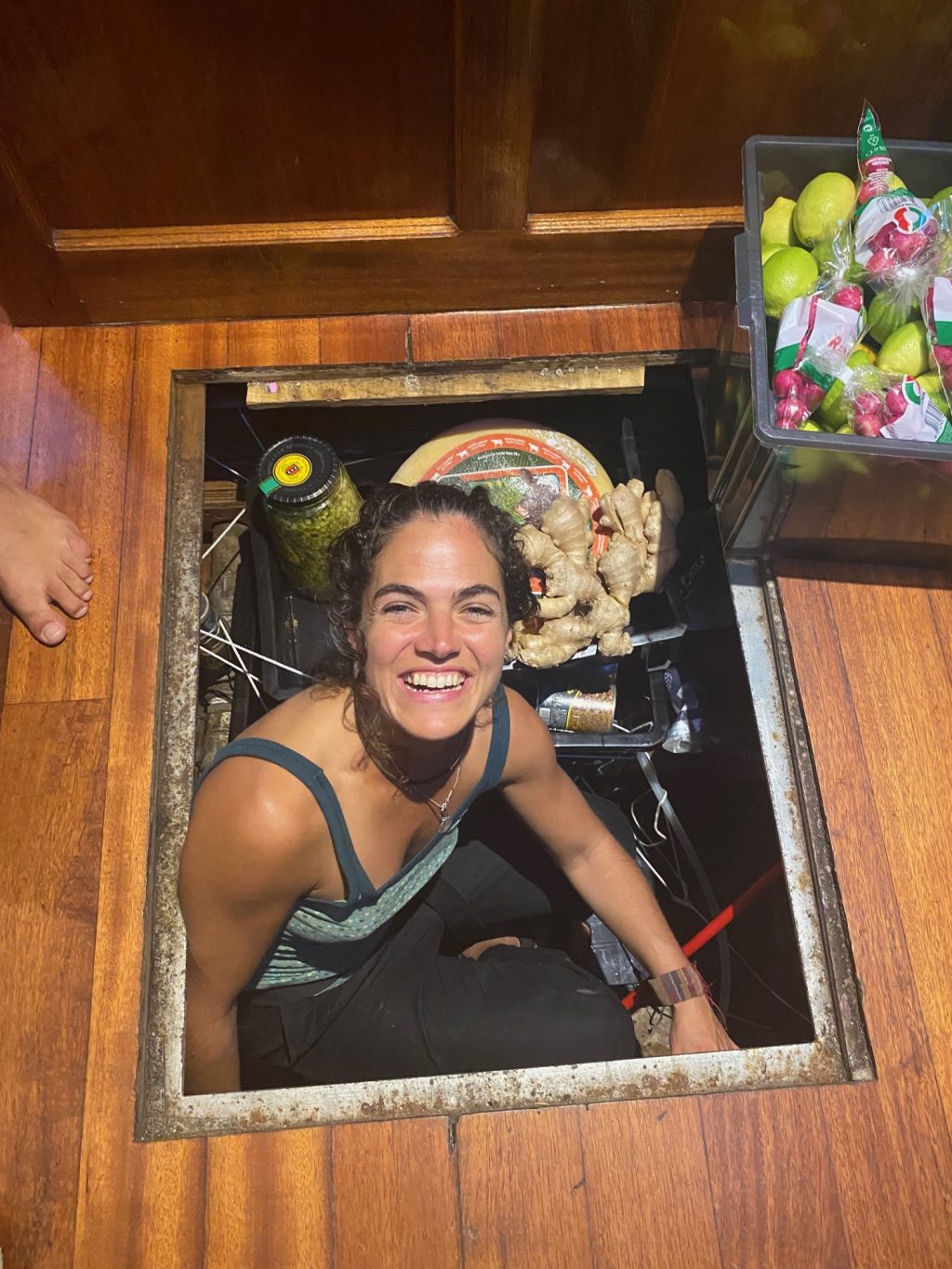
- Lean on ginger, garlic and turmeric. Handy little galley spices that work in everything from dhal to soup and survive well without a fridge. Ginger is especially nice to have around when someone’s feeling queasy.
- Buy local and in season at each stop, and eat a little less meat at sea. Whatever is fresh where you land is cheaper, tastier and lighter on the ocean than something shipped in.
Bonus, eat warm and grounding. A cold, wet, windy passage can throw your body out of balance, and warm, grounding, easy-to-digest food brings it back: rice and dhal, soups, cooked vegetables, and warming spices like ginger, turmeric and cumin. It’s a bit of Ayurvedic common sense, and it feels far better than living on cold snacks when you’re tired, wet or a little queasy.
/


You’ll find more in our zero-waste-at-sea guide, our 10 tips for crossing the Atlantic by sailboat, and an Ocean Nomads map of places to provision along the sailing routes.
How long fresh food keeps on a boat
No fridge, warm weather, bought fresh from the market and stored dark, dry and airy. Roughly:
- Leafy greens, berries, soft herbs: 2 to 4 days, so eat these first
- Tomatoes bought green: 1 to 3 weeks, ripening as you go
- Carrots: 1 to 2 weeks, longer wrapped in a damp cloth
- Apples, oranges, lemons and limes: 2 to 4 weeks
- Cabbage (whole): 3 to 4 weeks, peel off the outer leaves as they go
- Potatoes and onions: 3 to 4 weeks, often longer
- Unwashed eggs, turned every few days: 3 to 4 weeks
- Pumpkin, squash and garlic: a month or more
Check the lockers every day and use whatever starts to turn first. In the Provision Planner in the member hub you’ll find the full list, plus a calculator that turns your crew and days at sea into real amounts.
Provisioning Planner & Tools
Provisioning a passage from scratch is weeks of work: how much of everything, what lasts, what to leave behind, where to shop, and what to cook. We’ve done all of it already, over more than 30 trips and 50,000 miles at sea, and put it in one place in the Ocean Nomads community so you can skip straight to the good bit:
- a calculator that turns your crew and days into real amounts
- what to buy: fresh, hardy and long-life foods
- recipes tried by the crew
- healthy and eco choices
- Organic provisioning spots around the Atlantic
- templates and spreadsheets
- from a weekend sail to a big crossing, adapt it instead of starting over
Fancy learning it by doing it? We provision this way on every Ocean Nomads voyage. Come and cook your way across with us.
More tips and tales to live a little wilder